
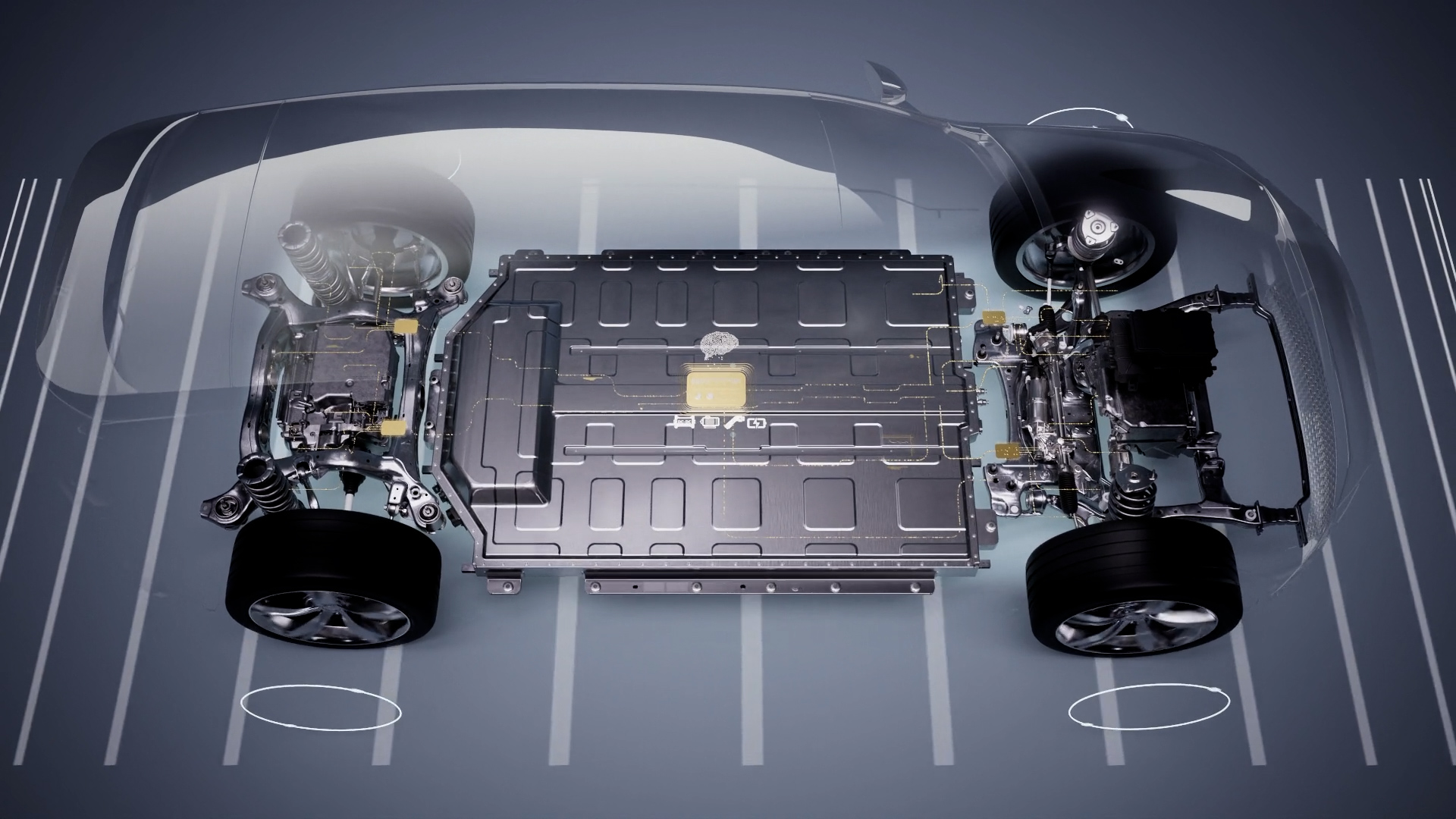
The Stellar P3E is the first automotive microcontroller to ship with ST’s Neural-ART Accelerator. It offers a 20x to 30x improvement in inference operations compared to a similar MCU without a dedicated machine learning IP. It’s also the first time ST is using a variant of its [Neural-ART Accelerator outside an STM32 device]. The Stellar P3E therefore demonstrates that our NPU has a greater reach than general-purpose microcontrollers and industrial applications, as car makers enjoy a robust, accessible platform with an extensive developer community. In essence, it’s a new beginning for drivers and passengers who should benefit from new AI applications in their vehicles in a few years.
The challenges of bringing AI to vehicles
The computational challenge
Machine learning in the automotive industry is the holy grail. Many are looking for it, but very few even know where to begin. Avid readers of the ST Blog will even recall that ST has development boards to help create machine learning applications for cars. However, the computational challenge remains one of the greatest issues, especially because vehicles often have very strict constraints. Systems have only so much RAM or computing power, and it’s very easy to overwhelm them. Run times must often be deterministic or near deterministic, and the overall system must be extremely reliable while also including safeguards. Drivers can’t “reboot” their car in the middle of a highway.
The high barrier to entry challenge
The other challenge is the adoption of the NPU itself. It’s one thing to have a hardware unit capable of accelerating the type of operations that drive machine learning applications. It’s another thing to actually have the right model, generate the neural network, and then optimize that said network to the MCU so inference operations run smoothly within the existing RAM, storage, and computational constraints. In fact, this is one of the greatest barriers to entry for many small teams, who can’t acquire enough data scientists or invest the time and resources needed to develop the complex AI algorithms that will shape tomorrow’s driving experience.
Stellar P3E: the solution to making AI in cars much more accessible
A more accessible ecosystem
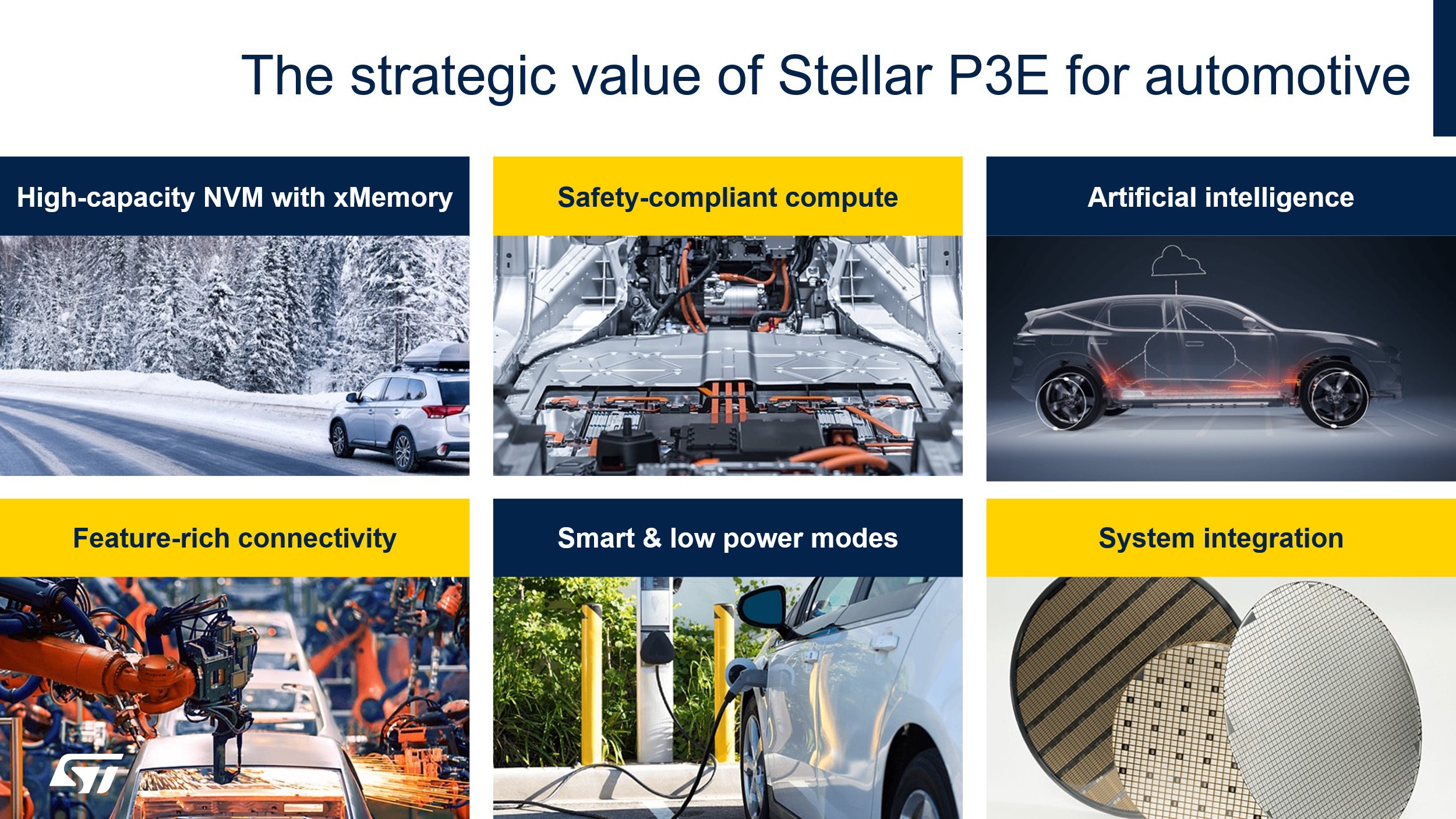
It’s for those very reasons that ST is launching the Stellar P3E. Its Neural-ART Accelerator shares its DNA with the NPU in the STM32N6, making it vastly more accessible. Developers will be able to use models provided by ST. They also gain access to easy-to-use development tools and can even start experimenting with mass-market boards before focusing on automotive-grade solutions. For instance, engineers can use the ST Edge AI Suite, which remains the first step on the Intelligent Edge adventure for many teams, regardless of their projects. It will thus be simpler to bring a model, or use one of ours, and benefit from our auto-quantization tools, emulations, and safety verification systems.
A tailored solution for cars
ST will also tailor its solution to the new Stellar P3E. For instance, we will add new models to our Model Zoo to address the most common sensing and actuation functions in an automotive environment. We will offer new anomaly detection algorithms, adaptive control, or smart virtual sensors based on regression models. ST also tweaked the NPU in the Stellar P3E to focus on time-series data, like sensing and actuation. As such, it enables us to ship a more efficient system without incurring performance penalties, opening the door to predictive maintenance, smart driving modes, virtual sensors, and more.
Stellar P3E: a new way to build fast and safe X-in-1 ECU modules
6 Cortex-R52+ at 500 MHZ with split-lock
The new MCU features six Cortex-R52+ running at up to 500 MHz. It’s the fastest frequency for that core so far, enabling the highest CoreMark score for this product range at over 8,000 points. The underlying architecture will ensure greater performance for real-time applications while allowing engineers to use more sensors and write more complex programs. The Stellar P3E also supports two cores in lock-step and two additional cores in lock-step or split-lock. Lock-step means that both cores mirror each other, so one immediately takes over if the other fails. Split-lock allows cores to run independently, doubling the performance while maintaining the functional integrity essential for ASIL-B applications.
19.5 MB of next-generation xMemory PCM
While previous Stellar devices used ePCM with a two-bit-per-cell structure to ensure reliability, ST improved its technology to achieve the automotive-grade robustness with only one bit per cell, thereby doubling overall density compared to embedded flash, MRAM, or RRAM. The 19.5MB embedded memory is dedicated to code, enabling over-the-Air (OTA) updates by storing two separate code images to revert to a previous version if issues arise. ST also uses unique algorithms during the manufacturing process to make its PCM automotive-grade, whether it stores critical code or long-term data. Put simply, the xMemory of the Stellar P3E offers customers a large and robust storage pool to address multiple projects with different memory requirements.
106 ADC channels, Gigabit Ethernet, and more
The Stellar P3E is also versatile. For instance, modern electric motors often run above 10,000 rpm and thus require extreme precision. That’s why we offer 98 channels of SAR/SD ADC, 8 channels of low-power ADC, high-resolution timers, and redundant sensing, delivering the robust control required for advanced applications such as dual-motor control. We also included a scalable gigabit Ethernet interface to easily connect short distances while shielding the connections from very noisy environments. It’s particularly important when using the Stellar P3E in an X-in-1 electronic control unit (ECU) to consolidate the on-board charger, DC-DC converter, and other components into a single system.
How to get started?
We encourage companies that are interested in the Stellar P3E to reach out to their ST sales representatives. Due to the nature of the automotive industry, ST works with customers to adapt their development solutions. Samples of the MCU are available in limited quantities, and we expect full production by the end of 2026, while the software development solutions, including the AI tools, are available today. We also advise teams to consider the full breadth of ST automotive products, as our comprehensive portfolio can significantly support design operations. For instance, Pagani, an Italian hypercar maker, chose to work with ST because of our broad expertise.