

Editor’s Note: ITTIA will hold a series of workshops over the coming weeks focusing on its solutions and STM32 platforms. Check out the links at the end of this blog post to register.
When working with an STM32 microcontroller, ITTIA DB Lite, ITTIA DB Lite AI and ITTIA DB, from the eponymous member of the ST Partner Program, can transform an embedded system into a powerful data processing center. In a nutshell, ITTIA provides database and analytical software (ITTIA Analitica) to alleviate the shortcomings inherent to embedded systems and enable processing large amounts of data while limiting memory wear, ensuring fast or deterministic processing times, and supporting safer operations with enhanced recovery capabilities in case of adverse events, like a loss of power. As sensors multiply and AI at the edge increases the amount of data embedded systems process, engineers can’t simply rely on a basic filesystem.
The intricacies of data management on embedded systems
The reality of IoT systems

Too often, teams underestimate the amount of work it takes to handle data on embedded systems. The reason is that on typical computing platforms, this is mostly a solved problem. Operating systems handle read and write operations, and few developers have ever had to change, tweak, or even develop their filesystem. Even mobile embedded systems tend not to expose their low-level mechanisms to developers because the high-level APIs are more than sufficient. Unfortunately, IoT systems require much more optimization because they are significantly more resource-constrained and because the volume of data they process has skyrocketed.
The ill-advised approach of starting from scratch
Developers find themselves in a bind because while embedded systems still face the same constraints and challenges, much more is required of them. That leads teams to explore how to design their read and write mechanisms. However, many quickly realize that it’s a lot more cumbersome than it first appears. Writing to the flash, for instance, must be reliable, even when multiple tasks run simultaneously, or the system indexes stored data. It’s also critical to implement safety features in case of a bit flip, power loss, volume failure, or other issues. Additionally, solutions must have a very small footprint, or they risk increasing the memory needed, which would blow up the bill of materials.
The new challenges behind AI at the edge
Designers also tend to forget that a technology stack can rapidly become obsolete, forcing development teams to invest tremendous resources either to get out of their technological debt or to give up altogether and adopt a third-party solution, scrapping months or sometimes years of work. This is particularly evident in the latest AI trends, which are transforming IoT systems into edge AI platforms. And while the industry is celebrating this new use case for small embedded systems, developers are working behind the scenes to adapt to the new data-processing requirements, such as normalization, windowing, and gap handling, to name a few.
The efficacy of moving to a database
ITTIA DB, ITTIA DB Lite and ITTIA DB Lite AI
ITTIA offers several types of database solutions for edge datasets. ITTIA DB is a more traditional SQL database for microprocessors, with C/C++ APIs to help deploy instances faster. It’s also possible to query the database using a REST API, which greatly facilitates the development of web dashboards when building a cloud solution to monitor a large fleet or multiple sensors. For microcontrollers, such as STM32, ITTIA offers DB Lite, which prioritizes deterministic performance and includes mechanisms for safely and rapidly writing to flash storage and handling adverse events that may not be inherently available in the real-time operating system’s filesystem. Put simply, it makes data collection on an embedded system a lot more practical and robust.
ITTIA recently introduced ITTIA DB Lite AI for MCUs, extending ITTIA DB Lite into the Edge AI domain. Beyond data storage, ITTIA DB Lite AI enables embedded systems to prepare, transform, and feed data aimed at neural networks into models in real time, while integrating with frameworks such as CMSIS-NN and STM32Cube.AI for real-time inference support. ITTIA DB Lite AI turns structured data into actionable intelligence on the MCU. It provides on-device feature engineering, including sliding windows, lag/delta, aggregation, and normalization. Structured AI data pipelines with full data lineage from sensor to action enable real-time anomaly detection, predictive maintenance, and explainable decision-making on edge devices without cloud dependency.
Rolling window queries
One example of such a feature is the rolling-window query on live data streams. Sensor data is challenging because it’s constant. Depending on the application, there can be hundreds or even thousands of data points every minute. Ingesting, processing, and sending this data to the relevant frameworks can be challenging when the only resources available are a small amount of memory and a resource-constrained microcontroller. ITTIA circumvents this issue by defining a data window to capture, then rolling that window. It reduces the number of copy operations, thus saving RAM and CPU resources. It also helps diagnose AI issues, as developers can more easily review the data that produced unexpected results.
How to get started?
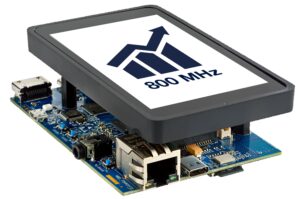
The best way to start experimenting with the ITTIA solutions is to request access to a demonstration on an STM32 device. We recommend using a discovery or evaluation kit for the STM32H5, STM32U5, STM32H7, or STM32N6. It is possible to combine ITTIA DB, ITTIA DB Lite, and Analitica on a single development board like the STM32MP157F-DK2 or STM32MP257F-DK. Users could run ITTIA DB on the Cortex-A35 of our STM32MP2, ITTIA DB Lite on its Cortex-M33, and benchmark read and write performance to internal and external flash under a wide range of conditions. Teams often underestimate their data management needs. By adopting such a hybrid solution, the theoretical becomes very practical.