

We are entering the age of quantum computing. What once belonged to theory is now moving into application. Early models are already demonstrating the disruptive potential of quantum technology that crosses industries. In fact, EY’s Quantum Readiness Report found that 81% of UK businesses anticipate “widespread disruption” from quantum computing before the end of the decade.
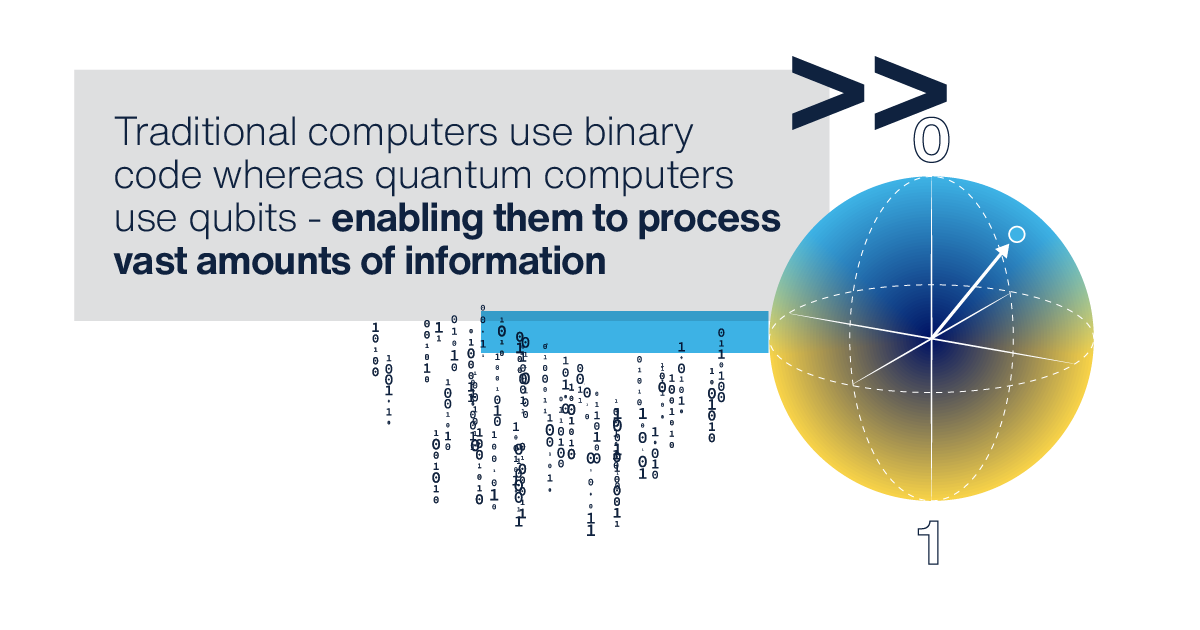 The reason is quantum’s extraordinary power. Traditional computers process data in binary bits – 0s and 1s. Quantum computers use qubits, which can simultaneously exist as both 0 and 1. This ability to hold multiple states at once means they can process vast amounts of information in parallel. That means problems that could take classical computers centuries to solve could be solved by quantum systems in seconds. This power brings both promise and risk. Quantum computing will reshape industries, but it will also challenge the limits of today’s security, infrastructure and ethics.
The good: quantum’s potential opportunities
If the technical challenges of developing widely usable quantum computers are overcome, and the full benefits are realised, it will represent a genuine revolution in computing in almost every sector. Medical research and drug discovery will be transformed. Quantum computers will model molecular structures at a level that traditional computers struggle with, accelerating research and development into new drugs. Protein folding and disease modelling will potentially lead to more rapid therapeutic breakthroughs for conditions such as Alzheimer’s disease.
Quantum computing could unlock potential solutions for addressing climate change, through more accurate climate simulations, development of new and sustainable materials, and more efficient resource use. In finance, risk modelling and fraud detection will be optimised in the commercial sector, while governments will employ quantum computing’s power for macroeconomic modelling, improving policy decisions. Industrial and supply chain operations, space exploration, urban planning, national security…there will be few parts of society, economics, and business that will be untouched by quantum computing’s positive potential.
The bad: a new world of cybersecurity risks
Cybersecurity is one of the most serious challenges link to quantum computing. The power of quantum computers will allow today’s encryption standards to be cracked in a fraction of time. Analyst firm Gartner predicts that current forms of asymmetric cryptography will become unsafe by 2029, and completely breakable by 2034. The implications are enormous. As Gartner notes, asymmetric encryption is in almost all software, billions of devices and most online communications. A joint statement drafted by cybersecurity authorities from European Union member states warn that if existing public-key schemes were to fail, the consequences for digital infrastructure would be devastating.
To counter these risks, researchers are developing post-quantum cryptography – encryption methods based on mathematical problems that quantum computers cannot easily solve. These include lattice-based algorithms, hash-based signatures, and multivariate polynomial equations – problems that remain computationally hard even with quantum processing power. Unlike RSA and ECC, which quantum computers can break using Shor’s algorithm, PQC algorithms are designed from the ground up to resist both classical and quantum attacks. Security agencies around the world are already urging a transition toward post quantum cryptography, moving away from current standards such as RSA and ECC.
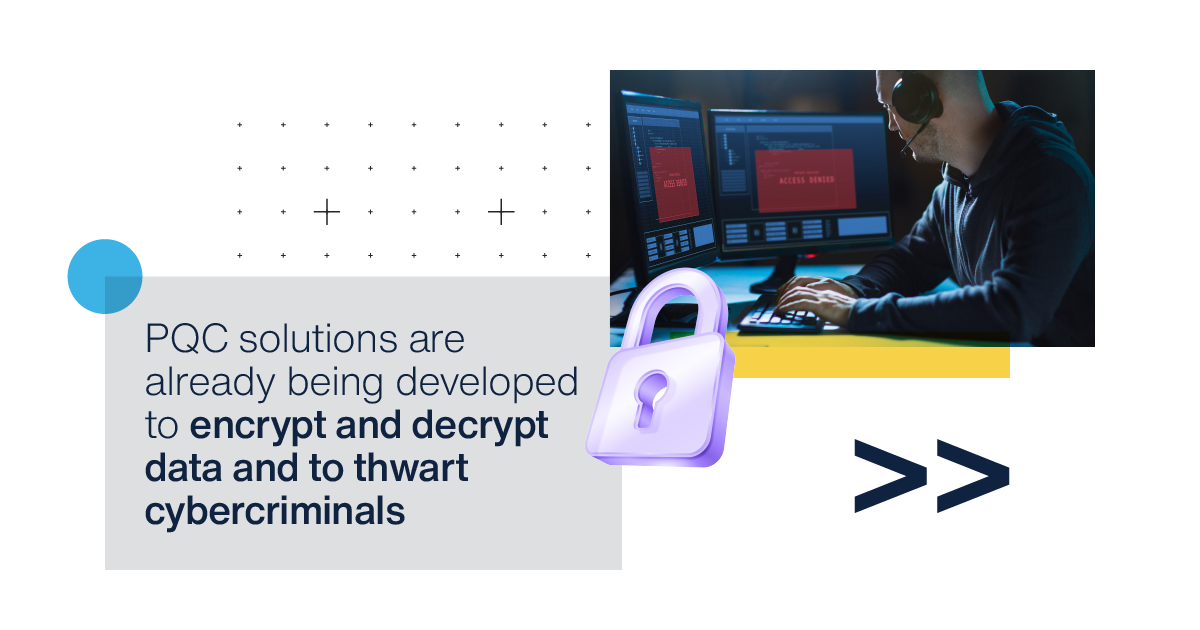 The shift to PQC is urgent – well before quantum computers have become widely available. Cybercriminals are not waiting for quantum technology to mature. In what are known as “harvest now, decrypt later” attacks, they are already stealing data like passwords and healthcare records, expecting to decrypt it once quantum computing becomes powerful enough. The good news is that standards for PQC algorithms are already being created, and companies including STMicroelectronics are delivering PQC solutions to underpin cybersecurity in the quantum computing age.
Forewarned is forearmed
Every technological epoch has its shadow side, and quantum computing will be no different. Its power to accelerate discovery and innovation threatens the very security foundations that protect today’s digital world. The main difference is that can prepare, unlike in past disruptions. The countdown to the quantum era has already begun and the smartest organizations are moving now – reinforcing systems, adopting PQC standards and future-proofing their data well before the shift arrives. Quantum computing will redefine what is possible, but quantum safe security will be the deciding factor in who’s ready for it.
- Discover how STM32 embedded systems are ready for future attacks
- Learn more on ST post-quantum cryptography program