

On the heels of the launch of the STM32C5, ST is now thrilled to announce upgrades to the existing STM32Cube Ecosystem in the form of an improved abstraction layer (HAL2), a new flavor of our famous STM32CubeMX tool that we will call STM32CubeMX2, and patches to STM32Cube IDE, as well as STM32Cube IDE for VSCode. The new STM32C5 microcontrollers are the first to support this updated ecosystem. ST will continue to support and update the first STM32Cube ecosystem, as our mission remains the same: ensuring developers can extract the full potential of their STM32 microcontroller when they use our suite of tools and solutions.
The STM32C5 and the entry-level challenge
The entry-level sacrifices
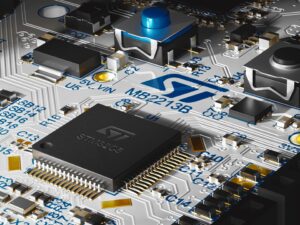
Finding the right entry-level MCU can be a real challenge. Teams looking for the lowest possible price must often accept harsh technological compromises. Either the microcontroller doesn’t provide sufficient computational throughput, or it doesn’t offer the right packaging. It often lacks memory, interfaces, or security features. And while hobbyists or labs working on a very basic proof-of-concept may not have too many issues with these sacrifices, any industrial application that aims to pass safety or security certifications finds itself at an impasse. As soon as engineers need greater performance, more RAM and flash, or higher operating temperatures, the limitations of entry-level MCUs can challenge the viability of a project.
The unique affordability of the STM32C5
Making entry-level MCUs is hard, and most companies try to offer more affordable components by cutting features that they think their customers will not need. The strategy has merit, but the STM32C5 offers more memory, security features, and numerous interfaces, while still featuring a unit price lower than competing Cortex-M0+ devices with similar memory configurations. Since we make our own MCU, we are able to optimize our 40-nm Cortex-M33 with 512 KB of flash to stand out. That’s one of the reasons we can offer a memory configuration with a 4:1 flash-to-RAM ratio, enabling developers to do more without buying a more expensive device.
Compared to a Cortex-M0+ with the same memory configuration, the Cortex-M33 of the STM32C5 offers greater computational capabilities, thanks in part to things like a floating point unit, which is a first at this price range, and integrated digital signal processing instructions. It means that not only will the new MCU run applications faster, but it can also run significantly more complex code. For instance, it can process a finite impulse response using 32-bit floating point operations about 40x faster. Consequently, an entry-level device can now run audio processing software, sensing applications, current measurements for motor control loops, or frequency responses in communication protocols with far greater ease.
The acceleration of DSP instructions, trigonometric functions, and other mathematical operations means that the STM32C5 can also run certain artificial intelligence algorithms a lot more efficiently than something like an STM32F1 or a competing Cortex-M0+. It’s a highly symbolic announcement because, while engineers can maintain or even lower their costs, depending on the previous design they were working on, the capabilities they enjoy have exponentially increased, enabling them to run a wake-word keyword algorithm or an object-detection application. In many instances, DSP instructions are at the heart of the operations required to filter data used for inference. The STM32C5 thus brings edge AI in entry-level markets.
The price of a platform, not just an MCU
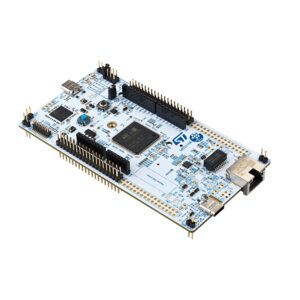
The breadth and extent of the STM32 Ecosystem also mean that acquiring an STM32C5 is not only about purchasing a microcontroller but also about gaining a platform. When teams need to move to a device from the same series with more or less RAM (the STM32C5 has up to 1 MB of flash), they can do so without revising their design, since the devices are pin-to-pin compatible. Additionally, the STM32 Ecosystem is a familiar platform. Hence, developers can reuse much of their code and build on previous experiences with other ST devices, opening the door to a far broader range of applications while reducing time-to-market.
To further help developers build their applications, we added one to three 12-bit analog-to-digital converters to directly work with more sensors. There is a maximum of two DACs and two comparators, and some models even have an operational amplifier. Additionally, the STM32C5 with 256 KB of RAM also includes an OctoSPI to provide a high-bandwidth interface to external flash modules. As we anticipate engineers wanting to do more with their entry-level systems, such as running a machine learning application, the ability to directly access sensor data and quickly fetch data from external modules becomes imperative.
STM32C5 and the industrial challenge
Maintaining clock calibration
Owning and perfecting the manufacturing process also means ST can innovate in ways entry-level devices usually can’t. For instance, the STM32C5 can guarantee a 1% clock calibration after soldering under temperature conditions ranging from -20ºC to 130ºC. This is fairly unique because, traditionally, entry-level devices can’t maintain calibration after the heat treatment they undergo during board manufacturing. With most entry-level MCUs, the oscillator simply can’t take that much heat and, therefore, loses its calibration. By refining our processes, we improved the oscillator design to ensure the clock calibration remains intact as long as the assembly follows the basic guidelines outlined in our technical note.
Certain applications require strict calibration. For instance, HVAC units with an indoor and an outdoor module must have a precisely synchronized clock to communicate with each other. This engineering challenge is far from new, and most designers solve it by adding an external clock that can provide the required accuracy despite harsh manufacturing processes. However, the STM32C5 tramples all this since its optimized oscillator can now do the same thing. Concretely, it means engineers don’t need to add two external clock oscillators (one on each module), which would increase overall costs and require dedicated MCU I/O. In real-world applications, that means fewer components and a more flexible design.
Compatible with industrial requirements
As explained above, industrial requirements often force teams to abandon entry-level devices. That’s why the STM32C5 offers features such as side-channel attack protection and two AES co-processors that accelerate encryption and decryption. We also offer models that contain a unique hardware key to help track devices during manufacturing. The STM32C5 is IEC 61508 (up to safety integrity level (SIL3) ) and IEC 60335-1/60730-1 Class B compliant, making it suitable for safety-critical applications. Additionally, it comes with three 12-bit analog-to-digital converters, even timers, one comparator, two watchdogs, and more. Put simply, it can run many industrial applications while significantly lowering overall costs.
Similarly, our expertise in manufacturing MCUs means we can guarantee a junction temperature of 140 °C and an ambient temperature of 125 °C without a degradation in performance, even at these high values. We also offer numerous interfaces, including FD-CAN, SPI, I3C, and an Ethernet module, which is rare at this price range. Additionally, we provide a wide range of packages, from a 3 mm x 3 mm UFQFPN20 housing to a 20 mm x 20 mm LQFP144. Put simply, when teams look at an industrial design that requires clock calibration, numerous interfaces, and lots of memory, the STM32C5 accomplishes something exceptional: it makes competing devices with a much slower core look extremely expensive.
Updates to the STM32Cube Ecosystem
Besides transforming the landscape of entry-level MCUs, the STM32C5 is highly symbolic because it is the first STM32 microcontroller to use our updated STM32Cube ecosystem, comprising an enhanced version of the ST Hardware Abstraction Layer (HAL2) and STM32CubeMX2. The new ecosystem builds on the current one while bringing optimizations. Hence, people familiar with the STM32Cube Ecosystem will feel right at home in this new environment.
HAL 2
As engineers replace their STM32F1 or experience a whole new set of features with an entry-level MCU, they also gain access to optimized drivers and APIs in the STM32CubeMCU package for the STM32C5. Thanks to HAL2, we significantly reduced the flash usage by up to 59% on some peripherals, such as RCC, and optimized resource management. HAL2 also works directly with low-level APIs, allowing developers to call them more quickly to further optimize their application. The updated HAL is also IEC 61508/SC2-ready and MISRA C-compliant, helping those working on safety applications. Furthermore, the code is more easily portable to future ST MCUs compatible with HAL2, allowing developers to reuse much more of their application.
To help developers working with this updated HAL, we are releasing production-ready example projects. Developers can, therefore, use this code to learn how to implement STM32C5 features and use HAL2 to create richer applications that better differentiate themselves from the competition. And while this is only an update to the original HAL, the example code will help teams spot the nuances and understand how the new MCU leverages these updates. It’s a way to make our microcontrollers more accessible to all developers, regardless of their experience level. These example applications will also be available through our online libraries and are just the first of many ST will release over time.
STM32CubeMX2
It’s also why we are adding a new flavor of STM32CubeMX, called STM32CubeMX2. STM32CubeMX is such an integral part of the developer’s journey when initializing an STM32 MCU that any significant improvement to the HAL must also come with updates to this utility. Hence, STM32CubeMX2 offers a new user experience and a more capable command-line interface, enabling developers to automate their workflows. We are also shipping a new code preview feature enabling any developer to see the impact of a setting or a configuration on the code before generating it. Concretely, it means they can copy and paste code snippets into their projects without having to regenerate everything.
A more intuitive workflow
We worked on various aspects of a developer’s workflow to make the whole process more intuitive. We updated STM32CubeIDE and STM32Cube IDE for VSCode to help leverage the new features in HAL2 and STM32CubeMX2, thanks to UX and compiler updates. More critically, we are also adopting a new approach, with getting-started guides tailored to developers with no experience with STM32 devices. Moreover, we are creating new documentation and knowledge base articles to ensure that vibe coders receive accurate and relevant information. In a nutshell, ST continues to provide strong embedded software fundamentals and to make them more accessible, whether through our ecosystem or the way developers use large language models today.