
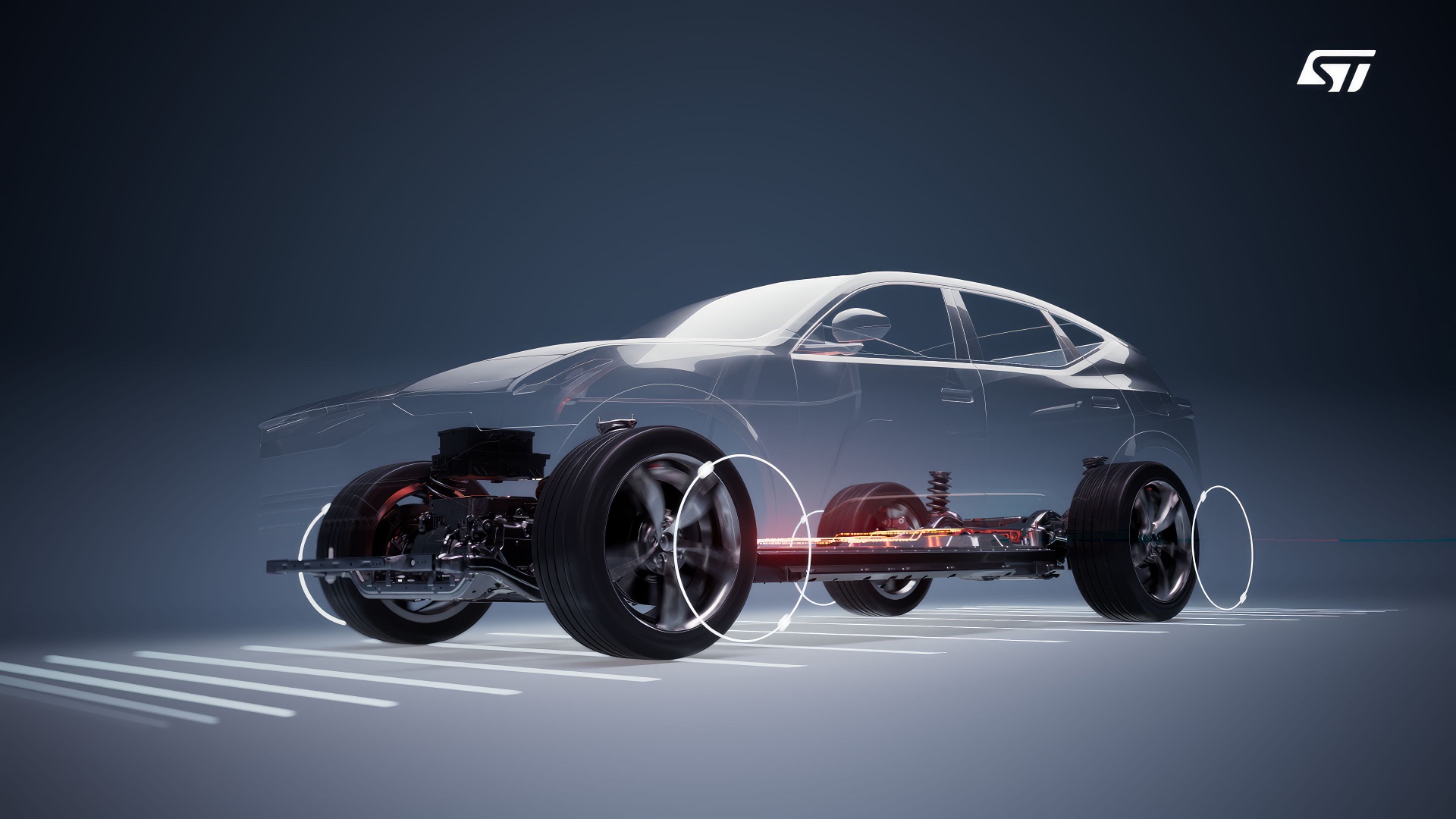
Smart power distribution in cars is a unique challenge because it is one of those extremely rare design predicaments that affects all types of vehicles at once. Whether it is [one of the most cutting-edge supercars in the world], a luxury sports platform, a mainstream electric vehicle, or a model with a combustion engine, all must handle new ways of distributing power throughout their various zones and endpoints. Implementation details vary, but all must wrestle with greater batteries, new architectures, and a fundamentally different way of approaching safety and software. The answers lie in devices with greater performance and topologies that are significantly more efficient.
Why smart power distribution matters more than ever
Managing increasingly complex systems
New challenges in power distribution in cars stem partly from the industry’s increasing integration of computational units. There is a move toward zonal architectures, which does explain a lot of it, but car manufacturers have been pivoting toward consolidating resources for a while without necessarily championing an entirely new zonal platform. Indeed, some are happy to create hybrid solutions using mixed topologies because they strike a balance between reusing reliable designs that offer cost savings and reaping the benefits of the latest innovations in power distribution. However, that still means dealing with new software paradigms, including new smart power management capabilities.
Indeed, the automotive industry has familiarized its customer base with the fact that each new generation brings more safety features, sensors, actuators, motors, and complex software. As a result, systems have become increasingly power-hungry, meaning that power distribution systems have had to get smarter, with aggressive standby features to save on battery. They also require better protection, with semiconductor e-fuses offering far greater precision and resilience against adverse events. That has already led to a reduction in wiring harnesses, as we saw in 2024. Furthermore, if a zone governs new critical features like braking, in addition to things like heaters, it must have new fail-safes, detect hazardous events quickly, and potentially offer remedies.
Adapting to larger physical constraints
Other factors currently impacting smart power distribution include reliability and overall vehicle weight. As batteries grow heavier, this last consideration has gained traction, and engineers must, consequently, find new optimizations to balance things out. It also explains why teams have to adopt a more holistic approach. Focusing only on electronic control units, for example, can’t help them achieve the new power requirements. Teams must design appropriate zones and I/O aggregators for the digital computing blocks, while also integrating the power-driving elements, the networking system, and the power-distribution e-fused channels onto a single board or a constellation of modules, thereby affecting the physical design.
Dealing with greater electrical conversions
The democratization of electric vehicles is leading to an increase in charging architectures, with 800 V slowly becoming the norm. Concomitantly, 48 V batteries are no longer a foreign concept, as they are gaining market share. And while most current-generation vehicles still use a 12 V board net, some automakers are quickly switching to 48 V to reduce current levels and, consequently, cable size. Interestingly, the transition is taking place so rapidly in some circles that not all loads are yet able to adapt to higher voltage. As a result, DC/DC conversions of up to 1 kW are necessary for a 48 V-to-12 V conversion, or what the industry is naming the ‘legacy-loads’.
In these DC/DC converters, gallium nitride (GaN) enables dramatic reductions in magnetics. Its wide bandgap of 3.4 eV and electron mobility of 1,700 cm2/Vs mean power devices using this material can support high switching frequencies, thereby reducing losses and delivering more compact, ergonomic modules. Similarly, designers have to account for massive power conversions and additional power rails, which entail inherent challenges, such as increased sensitivity to transient voltages or the need for smarter and faster power regulators. It also means that engineers must create new designs to drive GaN power devices effectively, which can entail significant development efforts.
What smart power distribution is made of
STi2Fuse
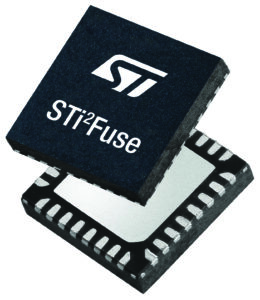
One of the solutions that is gaining tremendous momentum is smart fuses. The industry reached a turning point recently when it began introducing safety features that required eFuses. Indeed, we have been talking about ST’s STi2Fuse family of intelligent switches for years. Their sub-100 µs reaction time makes them far faster than traditional fuses, while their significantly greater precision means car makers can use a smaller wiring harness, and their resettability opens the way to features that would otherwise be impossible. For instance, a system can retest a circuit after triggering an eFuse to determine whether the adverse event persists.
It’s easy to think that the ability to eliminate the large fuse boxes around the vehicle would have car makers jump on eFuses, but many were content with this legacy design. However, as engineers now develop safety features in battery management systems, high-voltage safety, or autonomous driving, they are realizing that many of these functionalities actually require a device like the STi2Fuse. Battery management systems for electric vehicles and modern advanced driver-assistance systems (ADAS) use STi2Fuse because their performance is a necessity, and teams are also realizing that not all smart fuses are created equal. When it comes to ensuring the safety and well-being of drivers and passengers, poor specifications can have dramatic consequences.
VIPower
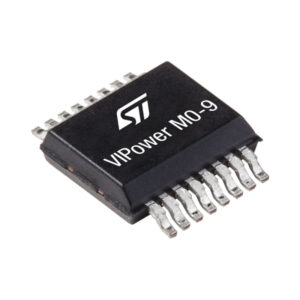
Another way the industry is moving forward is with high-side drivers, such as our VIPower family of devices, like the VIPower M0-9, which comes with a 10-bit analog-to-digital converter for current-sensing applications in cars, among other uses. We also offer models with motor drivers to help engineers bring more features to a smaller footprint. In this instance, the VIPower M0-7 H-Bridge helps create smaller boards capable of running a smart tailgate, automatic windows, etc.
This is an example of how a smart power distribution system is about doing more with less. For instance, devices like the VIPower M0-7 H-Bridge support multiple profiles, PWM, and a MultiSense pin to monitor Vcc voltage, package temperature, load current, or perform advanced diagnostic analysis.
The VIPower M0-9 is special because it inaugurated an SPI interface, which contributes to the new software trends governing cars today. Flexibility now means being able to customize a device’s behavior based on load types or other electrical conditions, while also offering information on advanced digital on-chip diagnostic and protection features that improve the monitoring capabilities of body electronic control units. Customization also ensures that a design is reusable, which significantly shortens development time and optimizes operations, since there are fewer components to qualify from one design to the next. Put simply, a smart power distribution system is as powerful as the control and protection it affords its creator.
PMIC
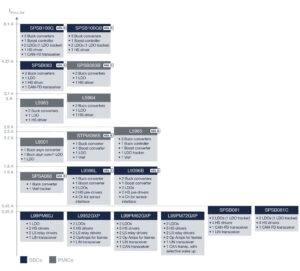
When talking about control, another solution that can make a significant difference is the power management ICs (PMIC). For instance, the SPSB081 can switch off the MCU to provide various standby modes, while also supporting LIN or CAN-FD to improve communication with other systems. Its SPI interface means developers can configure it on the fly to deliver 5 V or 3.3 V, while its low quiescent current ensures low power consumption when idle. ST even provides power schemes to help teams bring their products to market faster by reducing development time. ST offers variants of its PMIC for MCUs, ADAS, and more, thus helping designers tailor their systems.
There are so many more devices we could go into, such as the microcontroller, which often puts the “smart” in smart power distribution, MOSFETs, which are ever so crucial as we move to 48 V, and other interfaces or converters. Avid readers of the blog already know that ST has one of the widest portfolios of devices for smart power systems, and any attempt at an exhaustive list is both futile and unhelpful because the true test of a successful smart power distribution system is if it is greater than the sum of its parts. That’s why we also offer reference designs and a platform to help engineers learn from implementation examples.
How to get started with smart power distribution
STEVAL-PDUBV1
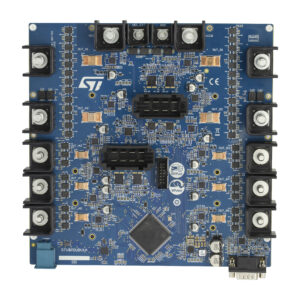
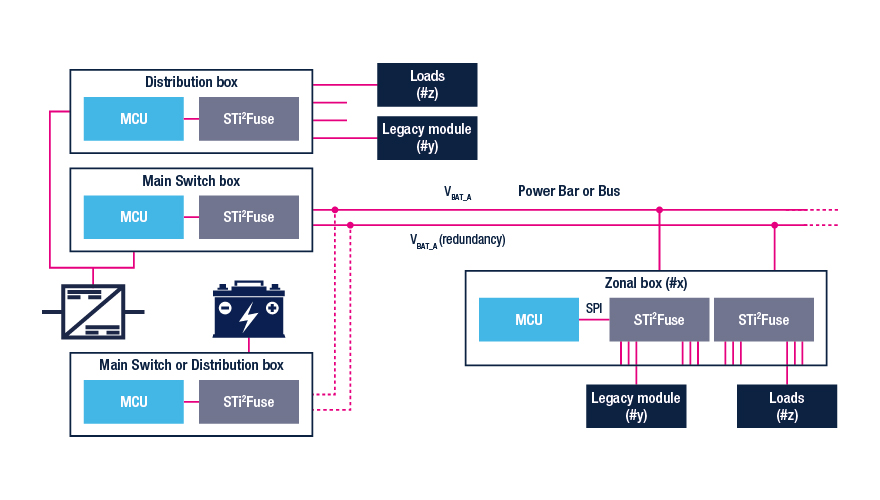
The STEVAL-PDUBV1 is a development board for a power distribution system. Its main board’s input connects to the car’s low-voltage DC-DC converter via two power rails, each with 13 output channels, and then distributes to different loads around the car using wire harnesses. Its ability to be close to the loads allows car makers to use shorter cables, while its STi2Fuse allows engineers to do away with the traditional fuse box. The ST board can serve as a reference design for a protection and delivery unit across various zones, including preheating, electric steering, body computers, and more.
The board runs on an SPC58G microcontroller with 6 MB of flash, for large applications. For instance, the STEVAL-PDUBV1 supports operating modes tailoring power distribution. A parking, or low-power, mode turns the eFuses and the microcontroller off and monitors current using the L99SP08 companion chip, which needs a lower current and provides advanced standby capabilities. Waking up the system is fast thanks to direct hardware connections, while sleep savings are significant. The assembly mode protects people working in car factories from electric shocks caused by ever-larger batteries. In addition, its support for CAN-FD, 10BASE-T1S, and 100BASE-TX (Ethernet) enables a power distribution node to become part of a more complex network within the distribution tree.
AEK-POW-PDUMINI
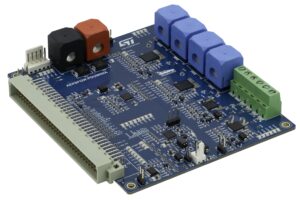
The AEK-POW-PDUMINI serves as a secondary power distribution unit that can connect to a small MCU board such as the AEK-MCU-C4MLIT3. It uses CAN-FD to communicate with end nodes, is accessible via CAN commands, and can help engineers design more complex systems while reducing the wire harness size by placing the power distribution unit closer to the load. In a nutshell, it is a smaller version of the STEVAL-PDUBV1, which helps consolidate certain control and protection functions. This is especially important when designing zone control units (ZCU), since they do much more than traditional ECUs and thus require eFuses, PMICs, drivers, and more.
PMICs
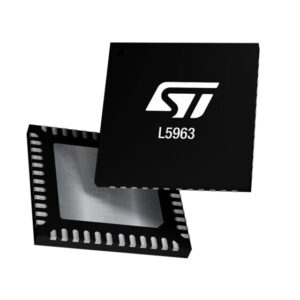
Working on a power management IC often involves finding a solution flexible enough for multiple designs. For instance, the L99PM62GXP includes two 5 V low-drop-voltage regulators and supports LIN and high-speed CAN for easier networking with other devices or power management. Additionally, an ST SPI interface provides a way for developers to control the device’s various modes and retrieve diagnostic reports, greatly facilitating debugging. To create more intricate solutions, engineers can also turn to the L5963, which offers a high-side driver and a low-dropout regulator, enabling direct connection to the battery for a multi-channel setup. Put simply, ST aims to offer the building blocks that will rapidly turn a proof-of-concept into something a car maker can use in a commercial vehicle.